When I was an undergraduate, those who were teaching me literature and imparting their conviction (as was fashionable at the time) that literature made one a better person were not leading by example. We were being exposed to the beautiful thoughts and carefully teased-out, finely-spun observations of Virginia Woolf and E. M. Forster and Katherine Mansfield, of Chekhov and Tolstoy and George Eliot, and it was supposed that we would absorb by a process of osmosis their finely wrought moral sensibilities.
Two things immediately became clear: (1) that the departmental Woolf-worshippers, Forster-favourers and Tolstoy touts imparting these views included among their number several people who habitually indulged in some of the pettiest, shabbiest behaviour I have ever seen before or since, and (2) that Virginia Woolf, God love her and her genius, was a Grade-A bitch, and Katherine Mansfield made her look like a beginner. I didn't mind their bitchery at all, not least because it was of the finest, but I wasn't under any illusions about either of them, or about the morally elevating effect that their work was allegedly going to have on me.
It was only years later when I came to read around in theories of narratology that I understood all this a little better. The notion of the 'implied author' is a useful one: it's what might be called the writer's best self, her wisest, her most adult, her most knowing and self-knowing self. In fiction or poetry the 'person who is speaking' just is not the same as that flawed being who ignores the dishes, fobs off her editors and creditors, loses patience with her elderly father, and swears at the person ringing from the call centre in Mumbai. None of this stuff makes its way to the pristine page: the implied author is a construct, a sort of distillation of all the best (and only the best) stuff that the writer has to say.
So it was a bit odd to be driving down Grand Junction Road on a Friday morning listening on the radio to the writer Aleksandar Hemon talking to Ramona Koval from the Sydney Writers' Festival about whether literature in particular and art in general were morally uplifting, for I've never been able to see how it could be or why it should be asked to carry so unreal and unreasonable a burden. No matter how many languages are spoken or instruments played, no matter how many books are read or operas attended, people will find a way of rationalising, and then doing, whatever it is that they want to do. They will find a way, as Hemon pointed out, to send you to Auschwitz or Birkenau even while they listen to Beethoven's Ode to Joy.
Literature can't make you a better person. But one thing it can do, if you ask it to, is get you through life's worst moments in slightly better shape than you might otherwise have managed -- either by giving you words to express the horror, or giving you consoling or diverting images, as on the pre-dawn drive I took some years ago to the hospital where my mother had just died, when a huge golden harvest moon hung on the horizon and lit the road for me all the way; there was time to dredge up at least twenty unforgettable literary moons, from the portent of a deadly storm in 'The Ballad of Sir Patrick Spens' to Jane Eyre's mystical communion with her own dead mother, via the stern imparted wisdom of the moon through her bedroom window, to the darkness and mystery of the moonlit Sydney Harbour where Joe Lynch lies drowned in Five Bells: 'Deep and dissolving verticals of light / Ferry the falls of moonshine down.'
Hilary McPhee, talking about literature at a writers' festival some time in the 1980's, said 'We read books in order to find ideas about ways to live our lives', and this seems to me to be a more modest, a more accurate and a more realistic claim. I have learned over decades from books and poems how better to deal with family conflict, with hard decisions, with love gone bad, with anger, despair and death. Reading literature hasn't made me a better person, but it has made me much readier for anything, good or bad, than I would ever otherwise have been.
Friday, May 26, 2006


Monday, May 22, 2006
Dulcet But Creepy
I've just been watching DBC Pierre on Denton. (I'm not sure DBCP qualifies as 'Australian literature', actually. Denton, as the son of novelist Kit Denton and himself a prolific writer if not strictly of 'literature', is probably a more legitimate topic for this purist blog.)
DBCP has an extraordinarily beautiful voice. He also has some gripping tales to tell -- tales of exotic places, larger-than-life characters, extreme experiences and shady deals. That is, he is formidably equipped as a fiction writer.
But I found his performance deeply disturbing and weird. If the cats brought him inside, I think I would put him back out in the garden.
DBCP has an extraordinarily beautiful voice. He also has some gripping tales to tell -- tales of exotic places, larger-than-life characters, extreme experiences and shady deals. That is, he is formidably equipped as a fiction writer.
But I found his performance deeply disturbing and weird. If the cats brought him inside, I think I would put him back out in the garden.
Thursday, April 27, 2006
Miles Franklin update
The shortlist as just announced is exactly the same as the one I hypothesised below, earlier today.
Nobody's gonna believe I didn't know. But as one of the judges who bailed a couple of years ago under interesting circumstances, I'm one of the last people likely to have been in the loop.
The three big names were predictable enough. There's a huge buzz around Carrie Tiffany because of her recent nomination for the Orange Prize, and Brenda Walker's work has been consistently excellent (and consistently undervalued) since she first began publishing fiction.
But I'm still a bit startled.
Nobody's gonna believe I didn't know. But as one of the judges who bailed a couple of years ago under interesting circumstances, I'm one of the last people likely to have been in the loop.
The three big names were predictable enough. There's a huge buzz around Carrie Tiffany because of her recent nomination for the Orange Prize, and Brenda Walker's work has been consistently excellent (and consistently undervalued) since she first began publishing fiction.
But I'm still a bit startled.
Miles Franklin shortlist due today
Here at high noon precisely, I can't find any online sign so far that the Miles Franklin shortlist has been announced yet, but it's expected before the end of the day. The length of the shortlist varies from year to year, but for what it's worth here's my prediction of what will survive from the longlist (see March 19 post) onto the shortlist. NB these are not necessarily personal favourites, just the things I think will make it:
Brian Castro, The Garden Book
Kate Grenville, The Secret River
Roger McDonald, The Ballad of Desmond Kale
Carrie Tiffany, Everyman's Rules for Scientific Living
Brenda Walker, The Wing of Night
Brian Castro, The Garden Book
Kate Grenville, The Secret River
Roger McDonald, The Ballad of Desmond Kale
Carrie Tiffany, Everyman's Rules for Scientific Living
Brenda Walker, The Wing of Night
Saturday, April 8, 2006
The Volcano
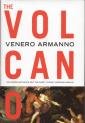 One item in the big pile of work I've just finished (hence no blogging for while now) is the review of a new novel by Venero Armanno, Candle Life. That's still under embargo, but while I'm thinking about it let me recommend his last novel, The Volcano, to anyone who hasn't read it. This book seemed to get the critical response it deserved only in Armanno's home state of Queensland, where it won the Premier's Prize in its year.
All of the major literary prizes have different chronological catchment areas so it's not easy to work out which would have been eligible for what in which year, but if my calculations are correct, The Volcano would have been up against some stiff competition for the 2002 Miles Franklin award -- Richard Flanagan's Gould's Book of Fish, Joan London's Gilgamesh and the winner, Tim Winton's Dirt Music, among others.
But I'm still very surprised that it didn't even make the shortlist. It deserves higher status as a contemporary classic: a rich, broad, deep, impassioned, rumbustious novel with overtones and undertones of magic realism firmly anchored (sorry, mixed metaphor, pah) in social and world history, with a wonderful cast of characters and a hero both lovable and memorable.
Thursday, March 30, 2006
This Writing Life
The question people seem to want to ask writers is about what the life is like. If it's not nine to five, then when and how and according to what schedule does one work? Does one sit staring at the keyboard waiting for the Muse to descend? Inspiration or perspiration? Where do you get your ideas from? And so on.
Interestingly this sort of questioning does seem to have died down a bit over the last ten or fifteen years though. Me, I think it's computers. The romance of the quill pen and the attic starvation routine is comprehensively over. Everyone uses computers for all kinds of things, and that fact has demystified the whole Being a Writer schtick quite a lot. From the inside, it was never mystified in the first place; just hardscrabble bouncing from one gig to another, providing of course that you're lucky enough to be getting enough work to live on in the first place.
So, MY DAY: Having got home last night from participating in a forum about writing just in time to watch House, I then did a couple of hours on some examining of dissertations in Gastronomy, results urgently needed by the university, before I went to bed. Up this morning to try to finish the last of said dissertations (marks, at least; the reports will have to wait) before going off to teach a 90-minute master class to the group who formed the hard core of the forum audience last night.
Between getting home from that mid-afternoon and going out again tonight to a review a play (theatre 29 km from my house; the review will have to be written and filed before I go to bed, and I don't expect to be home much before eleven) I need to start working on the two book reviews, one of which is due on April 1, the other already overdue. Tomorrow I will work on the book reviews and the examiners' reports, stopping only for a working lunch with the editor of a magazine to which I contribute.
Some time in there I expect to get an email from the person working on the grant application for a big project I'm involved in to say that my contribution to the application isn't good enough and could I please make it bigger and better. Tomorrow I also need to do a bit of creative banking, as some of the work I've not yet been paid for was done and dusted as long ago as the beginning of February.
From where I'm standing, the writer's life is one in which no books get written. You're too busy making a living.
Interestingly this sort of questioning does seem to have died down a bit over the last ten or fifteen years though. Me, I think it's computers. The romance of the quill pen and the attic starvation routine is comprehensively over. Everyone uses computers for all kinds of things, and that fact has demystified the whole Being a Writer schtick quite a lot. From the inside, it was never mystified in the first place; just hardscrabble bouncing from one gig to another, providing of course that you're lucky enough to be getting enough work to live on in the first place.
So, MY DAY: Having got home last night from participating in a forum about writing just in time to watch House, I then did a couple of hours on some examining of dissertations in Gastronomy, results urgently needed by the university, before I went to bed. Up this morning to try to finish the last of said dissertations (marks, at least; the reports will have to wait) before going off to teach a 90-minute master class to the group who formed the hard core of the forum audience last night.
Between getting home from that mid-afternoon and going out again tonight to a review a play (theatre 29 km from my house; the review will have to be written and filed before I go to bed, and I don't expect to be home much before eleven) I need to start working on the two book reviews, one of which is due on April 1, the other already overdue. Tomorrow I will work on the book reviews and the examiners' reports, stopping only for a working lunch with the editor of a magazine to which I contribute.
Some time in there I expect to get an email from the person working on the grant application for a big project I'm involved in to say that my contribution to the application isn't good enough and could I please make it bigger and better. Tomorrow I also need to do a bit of creative banking, as some of the work I've not yet been paid for was done and dusted as long ago as the beginning of February.
From where I'm standing, the writer's life is one in which no books get written. You're too busy making a living.
Sunday, March 19, 2006
On Literary Prizes
Recently I had an email from a US blogger asking me a very interesting question about prizes: he wanted to know whether I thought the (Man) Booker prize had ever gone to the wrong book.
I checked out available lists of shortlists and winners and was ashamed to discover that I hadn't read a large enough proportion of them to be able to give a meaningful answer to his question. My excuse is that when one reads for a living, one's reading, while reasonably voluminous, is of necessity shockingly skewed.
All I could say for sure was that there were a handful of winners I thought would have deserved the prize no matter what the competition was: Coetzee for Disgrace, Byatt for Possession, Pat Barker for The Ghost Road, Arundhati Roy for The God of Small Things and Kazuo Ishiguro for The Remains of the Day. Even that list is a tad meaningless, as there are many other winners I've not read. (Which of these Titans woud be the über-winner? Could such a choice be made, and if it could, could it possibly mean anything?)
Readers get passionate and writers get vulnerable whenever the topic of prizes comes up. People on judging committees stare at each other in wide-eyed, jaw-dropped disbelief, unable to process whatever mad opinions they have just heard coming out of each others' mouths. Writers who get shortlisted and then don't win are unable to keep up the exultation of getting shortlisted and instead just sulk because someone else beat them.
(Amusingly, sometimes their partners sulk vicariously; you can tell a great deal about what drives a writer's relationship with his or her partner by watching the partner's behaviour on prize nights.)
Are literary prizes a good thing or not? The same arguments tend to get trotted out and rehashed over and over, and I'm usually quite up to arguing sincerely on both sides of the issue. Yes, prizes are bad because they encourage the idea of competition in art (corruptive) as well as the idea that it's possible to come up with an evaluative hierarchy and say with conviction 'This book is better than that book', an activity I dislike. But on the other hand, no, prizes are not a bad thing, because they mean money for writers. Can't go past that one.
What brought all this on, of course, apart from the email from the US blogger, was the announcement last week of Kate Grenville's Commonwealth Writers' Prize win for The Secret River, closely followed by the announcement of this year's Miles Franklin Literary Award longlist. Grenville is on that list as well, and has to be the front runner. Australian Book Review editor Peter Rose seemed genuinely startled, when I saw him last week, to find his novel A Case of Knives on the same longlist, which was one of the most endearingly modest moments I've ever seen from any writer I've ever met.
Potentially controversial choices from this longlist include Peter Temple's The Broken Shore, which is brilliantly written borderline generic 'crime', and Christos Tsiolkas's Dead Europe, which has made some rational grown-up men and women grind their teeth and/or throw up -- a new and colourful addition, in the critics' lexicon, to the more usual 'I laughed, I cried.'
This was Kate Grenville's competition for the Commonwealth Writers' Prize:
Regional shortlist (South East Asia and the South Pacific)
March by Geraldine Brooks
Grace by Robert Drewe
The Lost Thoughts of Soldiers by Delia Falconer
Blindsight by Maurice Gee
The Secret River by Kate Grenville
Surrender by Sonia Hartnett
Sandstone by Stephen Lacey
The Ballad of Desmond Kale by Roger McDonald
The Marsh Birds by Eva Sallis
The Book Thief by Markus Zusak
Regional winners
The Secret River by Kate Grenville
On Beauty by Zadie Smith
The Sun by NIght by Benjamin Kwakye
Alligator by Lisa Moore
And here's the Miles Franklin longlist:
Anne Bartlett, Knitting
Brian Castro, The Garden Book
Kate Grenville, The Secret River
Steven Lang, An Accidental Terrorist
Roger McDonald, The Ballad of Desmond Kale
Alex Miller, Prochownik's Dream
Joanna Murray-Smith, Sunnyside
Peter Rose, A Case of Knives
Christos Tsiolkas, Dead Europe
Peter Temple, The Broken Shore
Carrie Tiffany, Everyman's Rules for Scientific Living
Brenda Walker, The Wing of Night
I checked out available lists of shortlists and winners and was ashamed to discover that I hadn't read a large enough proportion of them to be able to give a meaningful answer to his question. My excuse is that when one reads for a living, one's reading, while reasonably voluminous, is of necessity shockingly skewed.
All I could say for sure was that there were a handful of winners I thought would have deserved the prize no matter what the competition was: Coetzee for Disgrace, Byatt for Possession, Pat Barker for The Ghost Road, Arundhati Roy for The God of Small Things and Kazuo Ishiguro for The Remains of the Day. Even that list is a tad meaningless, as there are many other winners I've not read. (Which of these Titans woud be the über-winner? Could such a choice be made, and if it could, could it possibly mean anything?)
Readers get passionate and writers get vulnerable whenever the topic of prizes comes up. People on judging committees stare at each other in wide-eyed, jaw-dropped disbelief, unable to process whatever mad opinions they have just heard coming out of each others' mouths. Writers who get shortlisted and then don't win are unable to keep up the exultation of getting shortlisted and instead just sulk because someone else beat them.
(Amusingly, sometimes their partners sulk vicariously; you can tell a great deal about what drives a writer's relationship with his or her partner by watching the partner's behaviour on prize nights.)
Are literary prizes a good thing or not? The same arguments tend to get trotted out and rehashed over and over, and I'm usually quite up to arguing sincerely on both sides of the issue. Yes, prizes are bad because they encourage the idea of competition in art (corruptive) as well as the idea that it's possible to come up with an evaluative hierarchy and say with conviction 'This book is better than that book', an activity I dislike. But on the other hand, no, prizes are not a bad thing, because they mean money for writers. Can't go past that one.
What brought all this on, of course, apart from the email from the US blogger, was the announcement last week of Kate Grenville's Commonwealth Writers' Prize win for The Secret River, closely followed by the announcement of this year's Miles Franklin Literary Award longlist. Grenville is on that list as well, and has to be the front runner. Australian Book Review editor Peter Rose seemed genuinely startled, when I saw him last week, to find his novel A Case of Knives on the same longlist, which was one of the most endearingly modest moments I've ever seen from any writer I've ever met.
Potentially controversial choices from this longlist include Peter Temple's The Broken Shore, which is brilliantly written borderline generic 'crime', and Christos Tsiolkas's Dead Europe, which has made some rational grown-up men and women grind their teeth and/or throw up -- a new and colourful addition, in the critics' lexicon, to the more usual 'I laughed, I cried.'
This was Kate Grenville's competition for the Commonwealth Writers' Prize:
Regional shortlist (South East Asia and the South Pacific)
March by Geraldine Brooks
Grace by Robert Drewe
The Lost Thoughts of Soldiers by Delia Falconer
Blindsight by Maurice Gee
The Secret River by Kate Grenville
Surrender by Sonia Hartnett
Sandstone by Stephen Lacey
The Ballad of Desmond Kale by Roger McDonald
The Marsh Birds by Eva Sallis
The Book Thief by Markus Zusak
Regional winners
The Secret River by Kate Grenville
On Beauty by Zadie Smith
The Sun by NIght by Benjamin Kwakye
Alligator by Lisa Moore
And here's the Miles Franklin longlist:
Anne Bartlett, Knitting
Brian Castro, The Garden Book
Kate Grenville, The Secret River
Steven Lang, An Accidental Terrorist
Roger McDonald, The Ballad of Desmond Kale
Alex Miller, Prochownik's Dream
Joanna Murray-Smith, Sunnyside
Peter Rose, A Case of Knives
Christos Tsiolkas, Dead Europe
Peter Temple, The Broken Shore
Carrie Tiffany, Everyman's Rules for Scientific Living
Brenda Walker, The Wing of Night
Subscribe to:
Posts (Atom)